
Siding Contractor Milwaukee
Absolute Restorations works as a siding contractor Milwaukee homeowners can call for vinyl siding, fiber cement siding, and LP SmartSide engineered wood siding across Milwaukee, West Allis, 53214, and surrounding cities. The licensed contractor (DCQ #081500053) specifies siding systems for 43 annual freeze-thaw cycles, 40 mph+ lake-effect winds, and the moisture movement that affects Milwaukee exteriors year after year. Every siding system is selected for climate performance, weather protection, and long-term durability rather than appearance alone.
Milwaukee siding decisions should not be made the same way they are made in milder markets. Repeated freeze-thaw movement changes how panels expand and contract. Wind pressure changes how clips and fasteners perform. Moisture exposure changes how trim lines, joint seals, and wall edges hold up over time.
That is why siding installation in Milwaukee should be planned around material behavior, fastening, and weather resistance from the start.
For the broader exterior overview, use Exterior Services Milwaukee
Milwaukee Siding Material Comparison
Choosing the right siding material in Milwaukee means comparing more than color and cost. The material has to handle winter movement, repeated moisture exposure, and local wind behavior without failing early at joints, edges, or fastener lines.
Siding Types Milwaukee Climate Comparison
| Material | Thickness Spec | Freeze-Thaw Cycles | Wind Load | Maintenance | Cost / Sq Ft | Lifespan |
|---|---|---|---|---|---|---|
| Vinyl | 0.040" min | 43 cycles | DP40 (160mph) | Low | $4-$7 | 30-50 years |
| Fiber Cement | 5/16" | 50+ cycles | DP50 (170mph) | Moderate | $7-$11 | 50+ years |
| LP SmartSide | 7/16" primed | 40 cycles | DP35 (150mph) | Low to Moderate | $6-$9 | 40-50 years |
| Aluminum | 0.032" | 35 cycles | DP30 (140mph) | Low | $5-$8 | 40 years |
The most important local number on this page is 0.040-inch vinyl thickness.
That thickness is treated here as the minimum practical vinyl standard for Milwaukee because it helps reduce joint separation under repeated freeze-thaw movement. Lighter 0.035-inch vinyl may still be sold elsewhere, but it is not the stronger choice for Milwaukee weather.
Fiber cement siding remains one of the strongest long-term options for homeowners who want higher mass, strong wind resistance, and a long lifespan.
LP SmartSide fits homeowners who want an engineered wood appearance with lower maintenance than natural wood. Aluminum siding remains workable, but dent sensitivity still matters, especially where ladders, hail, or incidental impact are more likely.
The best siding decision in Milwaukee depends on:
- how much freeze-thaw movement the wall takes
- how exposed the house is to wind
- how much maintenance the homeowner wants
- how long the homeowner expects the material to last
A stronger Milwaukee siding decision is based on exterior performance first and style second.
Milwaukee Siding Freeze-Thaw Failure Analysis
| Failure Mode | Cycle Threshold | Prevention Spec | Repair Cost |
|---|---|---|---|
| Joint separation | 25-30 cycles | 0.040" thickness | $800-$1,500 |
| Buckling | 35 cycles | Proper expansion gaps | $1,200-$2,000 |
| Caulk failure | 20 cycles | Closed-cell sealant | $400-$800 |
| Clip pull-out | 40 cycles | DP40 wind-rated clips | $600-$1,200 |
Milwaukee siding usually fails first at the movement points, not in the middle of the panel. Joints open, sealant cracks, clips loosen, and edges begin shifting before the entire wall looks obviously damaged.
That is why siding material selection matters so much. A siding system that performs well in a softer climate may still struggle in Milwaukee if the panel thickness, fastening, or sealant choice is too light for the movement cycle.
Joint separation is one of the biggest local concerns because it starts earlier than many homeowners expect. Once the joint line opens, water and air begin reaching places they should not. Buckling usually appears when expansion is not given enough space during installation. Caulk failure matters because sealant often breaks down earlier than the material itself. Clip pull-out becomes more relevant once wind exposure and freeze-thaw stress work together over time.
Siding Installation Milwaukee — Code + Climate
A siding system should not be judged only by the panel chosen. Installation standards matter just as much. Milwaukee climate behavior changes how much room siding needs, how water should be shed, and how clips and sealants should hold through repeated seasonal movement.
Milwaukee Siding Installation Specifications
| Installation Element | Milwaukee Requirement | National Reference | Purpose |
|---|---|---|---|
| Expansion gaps | 1/4" at ends | 1/8" | Freeze-thaw expansion |
| Starter strip | Z-flashing | Standard starter only | Water shedding |
| House wrap overlap | 6" horizontal | 4" | Air barrier |
| Wind clips | DP40 rated | Standard clips | 40mph+ wind resistance |
| Caulk joints | Closed-cell 35% movement | Basic silicone | 43-cycle durability |
The most important siding-install detail on this page is the 1/4-inch expansion gap. That is double the 1/8-inch number often used as a lighter national reference. In Milwaukee, repeated thermal movement is strong enough that smaller expansion allowances create a much higher risk of buckling and joint stress.
Z-flashing at the starter strip matters because siding has to shed water correctly from the first course. House-wrap overlap matters because air and moisture control begin behind the panel, not only at the face of the wall.
DP40-rated wind clips matter because Milwaukee siding not only faces seasonal movement; it also faces gust pressure that works the fastening system repeatedly. Closed-cell sealant matters because sealant is often the earliest material to fail when movement and moisture repeat across multiple seasons.
Milwaukee Lake-Effect Wind Siding Requirements
Wind changes the siding discussion because the wall system is not only resisting moisture. It is also resisting pressure and uplift.
Wind Load Ratings Milwaukee Siding
| Wind Speed | Siding Type | Clip Requirement | Fastener Spec | Failure Point |
|---|---|---|---|---|
| 30-40mph | All types | Standard clips | 0.120" shank | Clip pull-out |
| 40-50mph | Vinyl / Fiber Cement | DP40 clips | 0.131" ring shank | Joint separation |
| 50-60mph | Fiber Cement | DP50 clips | 8d galvanized | Panel buckling |
| 60mph+ | All systems | Engineer review | Hurricane ties | Full detachment |
The most important wind number here is DP40. That rating matters because Milwaukee siding needs stronger clip performance than a lighter national default when lake-effect gusts begin pushing into the 40mph+ range.
For vinyl siding and fiber cement siding, that change is significant. Once gust strength moves into the 40-50mph band, a lighter clip pattern or weaker fastening approach can shift the failure point from simple movement into actual joint opening or panel instability.
That matters most on:
- exposed wall runs
- taller walls with broader wind loading
- corners and transitions
- homes in stronger wind ZIPs such as West Allis 53214
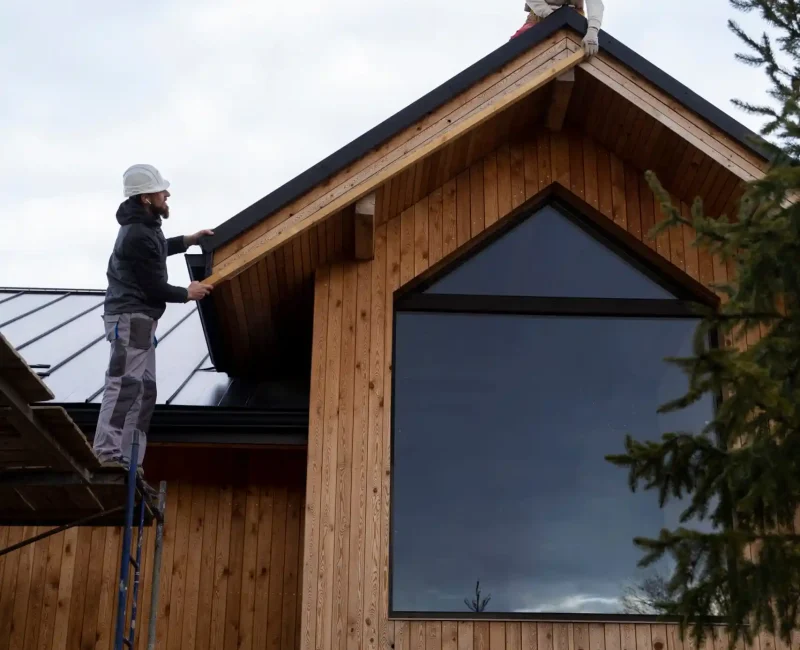
West Allis 53214 Siding Wind Exposure
- West Allis 53214 experiences 40mph+ gusts more often than the broader Milwaukee average
- Lake Michigan convergence contributes to wind-shear behavior that peaks in September and October
- Siding clip failure begins to become more likely at the 40mph threshold
- Annual siding inspection is practical for higher-exposure ZIPs with recurring gust pressure
This local wind context matters because homeowners need to know why the same storm may affect one wall system more severely than another. Exposure, wall direction, fastening strength, and ZIP-level weather patterns all affect how siding takes wind pressure.
That is why siding in West Allis 53214 should be evaluated with wind exposure in mind, not only wall appearance.
Siding Contractor Milwaukee — Integration Systems
Siding performs best when it is installed as part of a weather-control system. The siding does not work alone. It meets the roof edge, the windows, the gutters, the trim, and the ventilation path of the home.
Milwaukee Exterior Weatherproofing Checklist
| System Interface | Integration Spec | Milwaukee Purpose | Failure Risk |
|---|---|---|---|
| Siding + roof | 1" drip-edge overlap | Water shedding at wall edge | Water intrusion |
| Siding + windows | Flange + Z-flashing | Freeze-thaw seal protection | Air infiltration |
| Siding + gutters | 2" clearance | Thermal expansion and runoff clearance | Gutter stress |
| Siding + soffit | J-channel seal | Vent airflow continuity | Insect entry / vent loss |
These integration details matter because siding usually fails faster when it is installed as if it were separate from the rest of the exterior system.
A siding run that does not terminate correctly at the roof edge can direct water where it does not belong. A siding-to-window transition without proper flashing weakens one of the most moisture-sensitive points on the wall. A siding line installed too tightly against the gutter area can create thermal stress and drainage issues. A siding-to-soffit transition that does not maintain airflow can reduce ventilation performance at the roof edge.
For related exterior upgrades, use:
Milwaukee Siding Color Fade Resistance
| Material | UV Coating | Milwaukee Fade Rating | Recoat Cycle |
|---|---|---|---|
| Vinyl siding | Factory baked | 25-year finish warranty | None |
| Fiber cement siding | Pre-painted | 15-year finish warranty | 15 years |
| LP SmartSide | Primed only | Field paint required | 10 years |
| Aluminum siding | Mill finish | 10-year finish warranty | 15 years |
Color performance matters because Milwaukee siding not only faces cold weather. UV exposure, temperature change, and moisture movement all affect how the finish holds over time.
Factory-baked vinyl color remains one of the lowest-maintenance choices because it does not need a standard repaint cycle. Fiber cement holds color well when pre-finished, but repaint planning still matters over the longer term. LP
SmartSide needs stronger finish planning because it often depends on field-applied paint for the long-term appearance cycle.
Cost + Warranty — Milwaukee Siding Contractor
A good siding page should explain not only what materials are available, but what homeowners should expect for installed pricing and warranty value.
Milwaukee Siding Installation Cost 2026
| Siding Type | Cost / Sq Ft Installed | Sq Ft Range | Total Range | Warranty |
|---|---|---|---|---|
| Vinyl 0.040" | $6.50-$9.50 | 1,200-2,000 | $7,800-$19,000 | 50 years |
| Fiber Cement | $9.50-$13.50 | 1,200-2,000 | $11,400-$27,000 | Lifetime |
| LP SmartSide | $8.50-$11.50 | 1,200-2,000 | $10,200-$23,000 | 50 years |
The most important local cost point is that Milwaukee vinyl siding installation is treated here as $6.50-$9.50 per square foot when the system includes 0.040-inch thickness, DP40 clips, and the freeze-thaw preparation needed for local conditions.
That matters because a cheaper siding quote may not be using the same panel thickness, the same fastening standard, or the same climate-prep details.
Homeowners should compare siding quotes by asking:
- what panel thickness is being installed
- what clip rating is being used
- what expansion allowance is being planned
- what warranty actually applies to the installed system
Absolute Restorations installs siding in Milwaukee using 0.040‑inch vinyl, fiber cement, and LP SmartSide across West Allis, 53214, and surrounding cities. The licensed contractor (DCQ #081500053) specifies siding systems for 43 annual freeze-thaw cycles and 40 mph+ lake-effect winds. Installed siding ranges on this page run from $6.50 to $13.50 per square foot, depending on the material selected.
Absolute Restorations serves customers publicly from 3500 S 92nd St, Suite 2C, Milwaukee, WI 53228, while the contractor’s credential record is tied to 1326 S 74th St, West Allis, WI 53214. Siding installation is performed under DCQ #081500053 and $2M liability coverage through Policy PC02-2025-02205.
Milwaukee siding on this page is treated as requiring 0.040‑inch vinyl thickness, 1/4‑inch expansion gaps, and DP40 wind clips for stronger local performance.
Need a Siding Contractor in Milwaukee?
Absolute Restorations installs freeze-thaw-rated siding by Absolute Restorations (DCQ #081500053) across Milwaukee and nearby cities. DP40 wind-rated.
Free siding inspection. Fully licensed and $2M insured. 20 cities served.
FAQs
This page treats 0.040-inch vinyl siding as the minimum practical standard for Milwaukee because it helps reduce joint separation during repeated freeze-thaw movement.
This page uses DP40 clips as the practical Milwaukee standard for siding that needs to handle 40mph+ lake-effect gusts.
Installed siding commonly ranges from $6.50 to $13.50 per square foot, depending on whether the system is vinyl siding, fiber cement siding, or LP SmartSide.
This page treats 1/4-inch end gaps as the Milwaukee installation standard because they allow more room for freeze-thaw expansion than the lighter 1/8-inch national reference.