
Roof Insurance Claim Milwaukee
Absolute Restorations helps homeowners with roof insurance claim documentation across Milwaukee, West Allis, 53214, and surrounding cities. The licensed contractor (DCQ #081500053) prepares Xactimate scopes, organizes 25+ GPS-tagged photos, attends adjuster meetings, and helps homeowners understand the difference between ACV and RCV before the claim moves forward. In the Milwaukee claim framework used for this page, many roof claims move from filing to final payout in 6 to 10 weeks, and the difference between ACV and RCV often creates a payout gap of $3,000 to $8,000.
A roof insurance claim is not only about reporting storm damage. It is about how the damage is documented, how the scope is written, how the adjuster meeting is handled, and how the payout is structured. A homeowner can have real roof damage and still face delay, underpayment, or denial if the claim file is weak.
That is why this page stays focused on the claim process itself.
For the broader storm overview, use Storm Damage Roofing Milwaukee
Milwaukee Roof Insurance Claim Process — 6 Steps
A strong claim process should move in a clear order from documentation to payout. Homeowners should know what happens first, which documents matter most, and where the biggest claim decisions usually occur.
Step 1 — Damage Documentation Milwaukee
| Documentation Type | Quantity | Insurance Purpose | Milwaukee Standard |
|---|---|---|---|
| High-resolution photos | 25+ total | Adjuster evidence | GPS-tagged |
| Thermal images | 5–10 | Hidden damage proof | Moisture and deck support |
| Drone ridge shots | 10+ | Full roof exposure | Ridge and upper-slope review |
| Granule test | Quantified % | Hail impact support | Over 40% = total-loss discussion |
| Moisture meter | % reading | Deck failure support | Over 15% = replacement trigger |
The first step is not filing paperwork. The first step is building the evidence file correctly.
That matters because a weak claim file usually stays weak for the rest of the process. If the inspection only produces a few general photos and no measurable testing, the claim starts with less proof than it should. A stronger file begins with broad visual documentation, measurable findings, and location-specific evidence.
The 25+ GPS-tagged photo standard matters because it proves where the damage was recorded, when it was recorded, and how much of the roof was actually reviewed. Thermal images matter because not all claim damage stays visible at the surface. Drone ridge shots matter because upper slopes and ridge sections often control the scope discussion.
Step 2 — Xactimate Scope Preparation Milwaukee
- Damage inventory is built line by line from field findings
- Unit pricing is matched to current Milwaukee labor and material conditions
- Roof measurements are confirmed from site review and image-based measurement
- Depreciation structure is organized around the ACV versus RCV policy wording
- Supplement planning starts early in case the first insurance scope comes in low
- Day 1 delivery gives the claim a structured scope before the adjuster meeting slows the process down
Xactimate matters because it is the estimate format many adjusters already recognize. When the scope is written in the same line-item structure the carrier uses, the conversation becomes easier to compare and easier to resolve.
Day 1 scope preparation matters because late or incomplete estimating often weakens the claim before the adjuster ever sees the roof. A Milwaukee homeowner should not be waiting for the insurance carrier to define every part of the claim from scratch when the damage can already be documented clearly.
Step 3 — Adjuster Meeting Coordination Milwaukee
| Meeting Item | Why It Matters | What A Licensed Roofer Brings | Outcome |
|---|---|---|---|
| Scope review | Aligns roof damage with insurer estimate | Full Xactimate file | Cleaner comparison |
| Photo set | Proves damage pattern and location | 25+ GPS-tagged photos | Stronger evidence base |
| Thermal support | Shows hidden moisture or deck concerns | Thermal image set | Better hidden-damage support |
| Roof access review | Confirms full-slope conditions | Drone and field review | Broader roof visibility |
| Policy structure check | Clarifies ACV / RCV handling | Policy notes and scope match | Better payout clarity |
The adjuster meeting is one of the most important claim stages because this is where the documentation, the scope, and the policy structure all come together.
When the licensed contractor (DCQ #081500053) attends the meeting, the homeowner is not relying only on a broad damage summary. The discussion includes line-item scope, roof-wide photo evidence, and a clearer explanation of what the storm actually did to the roof.
Step 4 — Carrier Review and Initial Payment
After the adjuster meeting, the carrier usually reviews the documentation and issues the first payment decision.
That first decision often includes:
- acceptance or partial acceptance of the storm scope
- The first ACV payment
- any deductible adjustment
- any items the carrier excludes or questions
- requests for clarification or supplements
This stage matters because many homeowners think the claim is finished once the first check arrives. It usually is not. The first payment is often only the beginning of the payout path, especially when the policy is structured around ACV first and RCV later.
Step 5 — Work Completion and Supplement Filing
Once the roof work begins, the file may need to be updated again.
Supplements are often filed when:
- hidden deck damage is found during the tear-off
- flashing or transition scope expands
- code-required items increase the project cost
- the insurer’s scope missed part of the actual roof condition
This step matters because the original insurance scope is not always the full project scope. A claim can still change after work begins, especially when the roof opens, and previously hidden conditions become visible.
In the Milwaukee claim framework used for this page, supplements commonly add $1,000 to $5,000 to the total file when a hidden scope is discovered.
Step 6 — Depreciation Release and Claim Close
The last step is the part that many homeowners misunderstand the most.
Once the work is complete:
- the final invoice is prepared
- completion documents are sent to the carrier
- depreciation release is requested
- any approved supplement is finalized
- the file moves toward closeout
That’s where the RCV portion is often recovered after the initial ACV payment. In the Milwaukee claim, the timing used here, depreciation release commonly happens within 5 to 14 days after the carrier receives complete post-job documentation.
That final step matters because homeowners often believe the claim was underpaid when part of the remaining balance is actually waiting on the release process.
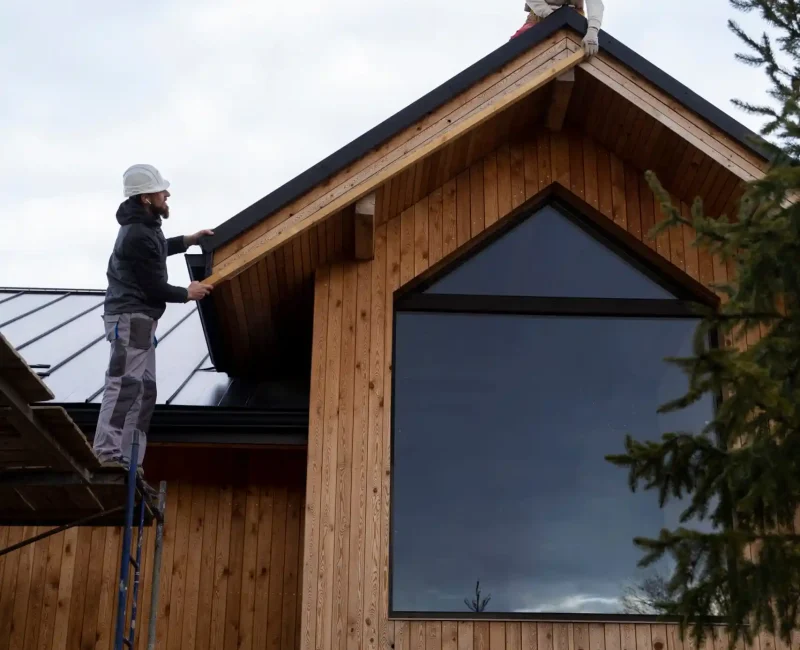
Milwaukee Roof Insurance Adjuster Meeting Checklist
The adjuster meeting is one of the most important parts of a roof claim. That is where the documentation, the scope, and the policy structure meet in one conversation.
What A Certified Roofing Lesley Brings to Every Milwaukee Adjuster Meeting
| Document | Purpose | Adjuster Benefit | Outcome |
|---|---|---|---|
| Xactimate scope | Line-item estimate | Familiar format | Faster scope review |
| 25+ GPS photos | Damage proof | Timestamp and location support | Fewer documentation disputes |
| Thermal images | Hidden damage support | Moisture and deck evidence | Stronger full-scope review |
| Drone ridge shots | Full roof exposure | Better upper-slope visibility | Better ridge and transition support |
| Policy review | Coverage structure | ACV / RCV clarity | Cleaner payout interpretation |
A contractor-present adjuster meeting matters because roof claims are often decided by what is shown clearly, explained clearly, and matched correctly to the policy.
When A Certified Roofing attends the meeting, the file does not stay limited to a few photos and a general damage statement. The discussion includes line-item scope, location-specific photo evidence, full roof exposure, and policy structure.
That gives the homeowner a stronger position than showing up with only a broad report.
Common Milwaukee Roof Insurance Claim Denials + Counters
| Denial Reason | Frequency | Counter Document | Success Direction |
|---|---|---|---|
| Wear and tear | Very common | Granule test over 40% | Stronger claim position |
| Insufficient damage | Common | 25+ GPS-tagged photos | Better visual proof |
| No storm record | Moderate | Satellite hail or storm record | Stronger event confirmation |
| Late filing | Moderate | Day 1 Xactimate scope | Cleaner timing support |
| Scope too high | Less common | Line-item breakdown | Easier estimate defense |
Denials often happen because the evidence file does not answer the carrier’s objection clearly enough.
If the objection is wear and tear, the file needs measurable proof that the roof is showing functional storm-related damage instead of ordinary aging. If the objection is insufficient damage, the file needs broader visual proof, not fewer photos. If the objection is no storm record, the claim needs verified storm-path support.
The strongest claim files are built to answer likely objections before they become formal denials.
ACV vs RCV Milwaukee Roof Insurance Claims
Many homeowners do not realize that the payout structure matters almost as much as the damage itself.
Milwaukee Roof Claim Payout Types Explained
| Claim Type | Definition | Typical Milwaukee Gap | Release Trigger |
|---|---|---|---|
| ACV | Actual Cash Value, with depreciation removed | $3K–$8K less | Initial payment |
| RCV | Replacement Cost Value, full recoverable amount | Full scope amount | Work completion |
| Supplement | Added scope found during project | $1K–$5K average | Change-order support |
The ACV vs RCV difference matters because it affects what the homeowner receives first and what still remains unpaid after the first insurance check arrives.
ACV means the policy is paying a depreciated amount first. RCV means the homeowner may recover the remaining amount later after work is completed and final documents are submitted. The gap between those two stages is one of the biggest sources of confusion in roof claims.
On Milwaukee roof claims, that gap commonly lands between $3,000 and $8,000. That is a meaningful difference. A homeowner may think the carrier is underpaying the roof when part of the payout is actually waiting on the depreciation-release step.
Milwaukee Roof Insurance Depreciation Release Process
- Initial ACV check arrives first
- Work completion creates the invoice and final job record needed for release
- Depreciation release request is submitted after the completed-work file is ready
- Supplement filing is added if hidden scope is discovered during the project
- Final walkthrough confirms the project is complete before the claim file closes
Depreciation release is often one of the least understood parts of the claim process.
The homeowner may think the carrier is refusing to pay the rest of the amount when the missing balance is actually waiting on the completed-work file. That is why the release process belongs on this page. It is part of the claim, not a separate bookkeeping issue.
In the Milwaukee claim timing used here, depreciation release commonly happens within 5 to 14 days after final documents are submitted.
Milwaukee Roof Insurance Claim Timeline
A claim feels easier when the homeowner understands the order and the likely timing.
Typical Milwaukee Roof Claim — Week by Week
| Week | Milestone | Duration | Who Handles |
|---|---|---|---|
| Week 1 | Inspection + Xactimate scope | 24 hours | A Professional Roofer |
| Week 2 | Claim filing + adjuster scheduling | 3–7 days | Homeowner + carrier |
| Week 3 | Adjuster meeting | 1 day | Homeowner + Licensed Roofer |
| Week 4–6 | Approval + ACV check | 7–14 days | Insurance carrier |
| Week 7–10 | Work completion | 2–3 weeks | Contractor |
| Week 11 | Depreciation release | 5–14 days | Insurance carrier |
Milwaukee claims usually move faster when the file is complete from the start.
That includes the scope, the photos, the measurements, the policy review, and the supporting documentation for the adjuster.
The homeowner does not control every stage of the timeline, but a well-prepared claim file reduces avoidable delays. The biggest slowdowns often come from incomplete evidence, unclear scope, or confusion over ACV versus RCV structure.
Milwaukee Roof Insurance Policy Review Checklist
A roof claim should not begin without understanding the policy itself.
What A Professional Roofer Reviews Before Every Claim
- Deductible amount — often in the $1K to $5K range in Milwaukee-area policies
- ACV vs RCV clause — determines how the payout is structured
- Storm date window — affects how long after the event the claim can be filed
- Replacement cost cap — may tie roof payout to a percentage of dwelling coverage
- Ordinance / law coverage — matters when code-required upgrades affect the final scope
- Exclusions list — separates sudden storm damage from excluded wear language
Policy review matters because two homeowners with similar roof damage can still end up with very different payout paths depending on the wording of the policy.
A deductible changes the out-of-pocket expectation. The ACV / RCV clause changes how much is released first. Ordinance and law coverage matters when code-required upgrades become part of the completed roof scope.
That is why policy review should happen early, not after the adjuster has already made the first decision.
Absolute Restorations prepares roof insurance claim Milwaukee through a six-step process that begins with documentation, moves into Xactimate scope preparation, continues through the adjuster meeting, and ends with depreciation release after work completion. A Certified Roofing Contractor (DCQ #081500053) attends all adjuster meetings across Milwaukee, West Allis, 53214, and surrounding cities.
The difference between ACV and RCV commonly creates a $3,000 to $8,000 gap that is recovered after work completion and release of depreciation.
Absolute Restorations serves customers publicly from 3500 S 92nd St, Suite 2C, Milwaukee, WI 53228, while the owner’s credential record is tied to 1326 S 74th St, West Allis, WI 53214. A Certified Roofing Contractor prepares Xactimate claim scopes under DCQ #081500053, and the business carries $2M liability coverage through Policy PC02-2025-02205. Milwaukee roof insurance claims commonly move from filing to depreciation release in 6 to 10 weeks when the documentation file is built correctly from the start.
For hail-related claim evidence, use Hail damage Roof Repair Milwaukee
For wind-related claim evidence, use Wind Damage Roof Repair Milwaukee
Need Roof Insurance Claim Help in Milwaukee?
Absolute Restorations prepares Day 1 Xactimate scopes by A Professional Roofer (DCQ #081500053). Free claim review. Adjuster meeting coordination. 25+ GPS-tagged photos. ACV and RCV payout guidance. Fully licensed and $2M insured.
FAQs
Milwaukee roof insurance claims commonly take 6 to 10 weeks, moving from Day 1 scope preparation to adjuster review, approval, work completion, and depreciation release.
ACV is the depreciated payment amount released first. RCV is the full replacement amount, with the remaining balance released after work completion. The gap between them commonly ranges from $3,000 to $8,000.
Yes. Joshua Lesley (DCQ #081500053) attends every adjuster meeting and brings the Xactimate scope, GPS-tagged photos, and supporting claim documents.
This page uses 25+ GPS-tagged photos as the working standard because they provide stronger location, timestamp, and damage coverage for the adjuster file.
Common denial reasons include wear and tear, insufficient damage, no storm record, and late filing. The strongest counters are measurable testing, broader photo documentation, verified storm data, and Day 1 scope preparation.